Saturday, January 10, 2015

A dog's life? Readers share their pet stories

Mary Adlington dog Murphy
Mary Adlington's dog, Murphy.

Murphy's lawless reign

I first saw Murphy on the day my dad died. Dad would have loved him. We decided at once that this bundle of black labrador was what we needed to cheer us up. We had always had rescue dogs, but Murphy was the first puppy we ever had. He became my fourth child and was not much bigger than my husband's shoe. From that time of sadness came years of joy.
Like all labradors he was driven by food and became adept at stealing it. At Christmas he stole the chocolate gifts hanging on the tree. He would nonchalantly slink past us with the tell-tale silver string hanging from his mouth, avoiding eye contact. When we had the builders in, he got into their van and stole their lunch, leaving the silver foil evidence on the lawn. When I stood at the door to say goodbye to friends after coffee, he would creep to the sugar bowl and then innocently come and stand next to me with a white, sugary nose.
But he had his uses as well. We walked him in the woods nearby and everyday he would bring home a log. As he grew stronger the logs became branches that would block the lane as we walked home. Even now, years after his death, we still have "Murphy's log pile". Mary Adlington

Our feline facilitators

Some of our pets have come and gone (chickens, fish, guinea pigs) but cats have been a constant since before our three children were born.
Trying to talk to my teenage son without the conversation sounding like a lecture or me getting cross at his apparent indifference, I found by accident that talking through our cats can break these barriers down.
So when something has gone wrong, the cat will sit with my son and me and ask the hard questions about how something has happened (clearly it's me doing the talking) and my son will reply lovingly to the cat. And if things are a little sad (dropped from the rugby team etc) our other cat, a tiny black kitten, will sit with us and facilitate the communication of feelings.
I know this sounds terribly twee and I should point out that my son is a normal 16 year old and I'm a normal (ish) father. I think it's the loving, non-threatening nature of a cat on your knee or squeezed up to one's chest, watching bright eyed and sometimes with a little purr as we speak, that allows a calm and often heartfelt conversation.
Anonymous

Falling for Bouncer

We didn't have children and just the two of us was fine by me. Then Andy said there were only so many dogs that he could own in his lifetime, so we went to see Bouncer and she came home with us. Within hours, she had tumbled down the stairs; explored the fishpond and escaped her puppy crate, spraying diarrhoea everywhere. I hated her. I coped by telling myself she was Andy's dog.
Then, two days after she arrived, Andy was admitted unexpectedly to hospital. Bouncer followed me devotedly, waddling unsteadily on her tiny puppy legs. That evening, I visited Andy, stinking of labrador wee and ragged with worry, leaving Bouncer shut in the kitchen. I berated my semi-conscious husband for his treachery.
On my return, Bouncer had gone. I searched the pond, hysterical, and finally ran wailing into the street, and into bedlam. Several neighbours had seen Bouncer run in front of a car: she had escaped by pushing through the catflap, the tape my DIY-hating husband had used to secure it flapping from her legs. A helpless puppy, looking as if she had had her legs bound with duct tape. It was no surprise that the Police and Animal Rescue were at the scene. One red face and a lengthy explanation later, I walked up the steps to the house with her wriggling in my arms, and knew then that she was my dog. Sarah Corbett

My guardian angel

Given that I have an allergy to cats, the sound of persistent mewing outside the back door one dark rainy evening, didn't fill me with delight.
On opening the door a small tabby kitten looked beguilingly up at me. What to do? I couldn't pick it up or I'd have started sneezing and wheezing within minutes. But neither could I leave it there. I had just split up with my partner and felt an affinity with this lost soul sitting outside on its own.
A novice at pets, I poured some milk into a saucer and placed it inside the door of the garden shed. The kitten trotted over, sniffed at the milk and settled inside for the night.
This pattern continued. In the difficult months when I had to get used to solitude, I came to rely on the kitten as a kind of independent companion who respected my space but kept me company, albeit at a distance.
After eight months I met a new partner and I think my little pet sensed this. One evening he didn't appear and I never saw him again, despite me keeping to my side of the bargain by providing food and drink.
I hope to this day that he went on to find another soul in need of company. He was my feline guardian angel for a short spell and I will never forget him. Anna Brown

The second life of Brian

My sister and I were thrilled when we bought our first flat. We cemented this rite of passage by obtaining kittens, brothers named Brian and Jerry.
Jerry was a nervous thing, who cowered under the bed when it thundered, while Brian was beautiful and fearless, with his affectionate nature, long tabby fur and appealing eyes. We loved them both.
Lindsey Sharp's kittens, Brian and Jerry Lindsey Sharp's kittens, Brian and Jerry. My sister married and bought the flat next door, and my brother moved in with me to help pay the mortgage but Brian and Jerry were still an important part of our family.
One morning, Brian went missing. We searched the streets but to no avail. Eventually, my brother came back, shaken, saying he had found Brian's body several streets away. Poor Brian had been hit by a car.
Distraught, we dug a hole in the garden while my brother retrieved the body. Still crying, we held a short ceremony and tried to contemplate life without Brian.
Just as we had filled in the hole, we turned round and saw ... Brian, sitting watching us. First with horror, and then with huge relief and happiness, we realised it wasn't Brian's ghost – we had buried someone else's cat. Lindsey Sharp

This hamster is for life

When I was 10 I bought a hamster. I loved him dearly, constantly worrying about his wellbeing. Once, my mum allowed my younger sister Suzie to play with him (something I'd never have sanctioned) Benjamin escaped through a hole in the floorboards. I arrived home to this crisis. It took three days, but we managed to coax him out using a trail of food.
Benjamin, the hamster that inspired Alan B Baker Alan B Baker's illustration of his hamster, Benjamin. Every morning before school I'd warm some milk and mix it with his food. One freezing morning in 1963, Benjamin didn't appear for his breakfast. I gently put my hand into his nest and lifted out a cold, hard, dead hamster. I couldn't accept he had died and prayed to God that he would be alive when I got home from school. Three days of constantly checking passed before I could tell Mum. My voice was somehow locked in my throat and I was unable to speak. I was very, very frightened of my own emotion and also suffered from a bad stutter. Eventually all the pent-up grief poured out. I thought I'd never stop crying. It was my first experience of death.
A month later my dad died.
Years later, at art school I wrote and illustrated my first children's book. The inspiration came from Benjamin. It led to a successful series. The royalties enabled me to buy a second house. My sister Suzie now lives there. The image above is of Benjamin from one of my books inspired by him, titled Benjamin's Portrait. Alan B Baker

Our chubby chaffinch guests

I found Salty and Deano when I was checking for nests in a tree we had to remove on safety grounds in Saltdean, near Brighton. There were three chaffinch chicks in the nest, mouths open wanting grub. I took two home, my colleague took the other.
After a confab with Lucia and Cerys, my daughters, we named them and kept them in their original nest inside a cardboard box, feeding them meal worms and water through a pipette. Deano was a bit greedy and became a rotund fluffy fellow in no time. Salty was choosier with his food but was fattening up nicely.
Carlos Daly's chaffinch chicks Salty and Deano, the chaffinch chicks Carlos Daly rescued. After a week they were perching on the radio aerial and hopping around. Lucia and Cerys took them to school one day, which went down well.
Next was flight school! Salty and Deano were flying around the kitchen and wanted to test out the big bad world so I took them to work with me and they met up with their sibling Grumpy for some flight experience.
After five weeks they were looking like proper chaffinches and the time came to let them go. I took them up to a woodland near me and they flew off. If you are in Brigh

Wednesday, December 10, 2014

In Vietnam, thieves cash in on growing emotional value of pet dogs

Woman with pet dog in Hanoi park
 A woman with her pet dog at a park in Hanoi’s affluent Tay Ho district. Photograph: Marianne Brown
In the golden light of a late Sunday afternoon, around a dozen people gather with their pet dogs at a small park near a lotus pond in Hanoi’s affluent Tay Ho district. The mood is convivial but there’s one topic that puts people on edge – dog thieves.
“While I was watching the final of the World Cup, our dog was robbed from the yard of the house,” says 40-year-old Hai, who sits in the park with his daughter and a two-month-old doberman puppy.
“There are more and more cases like this because now more people really love dogs, not just for meat like before, now dogs are part of the family,” he says. “The thieves recognise they can make money from it.”
Vietnam’s rapid economic growth has led to an increase in disposable incomes and changing lifestyles. More people are living alone to focus on their career, and want to keep pets for companionship.
Interest in pedigree pets has only emerged in the last few years, says Wayne Capriotti, editor of Vietnam’s first pet magazine Me Thu Cung. “The first pet store opened in Saigon in 2005, before that there was nothing,” he says. “I think there’s about 50 in Saigon now and maybe 20-25 in Hanoi.”
Many dog owners socialise and share information online. One of the most popular on Facebook is the closed group “Hoi Nhung Nguoi Yeu Con Cho Tai Hanoi” , which started in May last year and already has nearly 20,000 members.
“I can find a breeder who would give you any kind of dog,” Capriotti says. “A couple of years ago they wouldn’t know anything.”
But while the general public are learning more about pedigree breeds, so too are the thieves, he says. “They know a pure-bred rottweiler is worth a lot of money. They’re going to sell it to another pet owner, or ask for ransom.”
Vietnam is well known as a nation of dog eaters, especially in the North. Dog meat is usually consumed at certain times of the lunar month for good luck. Activists estimate around 5 million animals are slaughtered for the trade every year. Thefts of mongrels for the meat industry are widely covered in the local media, often accompanied by calls for stricter penalties for dog thieves. Earlier this month a 22-year-old man was jailed for a year after he was caught stealing six dogs.
Dog thefts for meat and for ransom are connected, says Le Duc Chinh, Vietnam coordinator of the Asia Canine Protection Alliance. “In my opinion, the crime is related to thefts for meat. It could even be the same people,” he says. However, pets stolen for ransom do not garner the same level of attention.
“Since I was appointed, I have not heard any reports about pedigree dogs being stolen by thieves, who then ask for a ransom then return the dog,” says Nguyen Anh Tuan, who was promoted to chief of the district police in Tay Ho last year.
man and dog on scooter in Saigon
A pet dog takes a ride in Saigon. Photograph: Alamy
But dog owners in Hanoi tell a different story. Of 10 people interviewed at the park including Hai, only one said he had never heard of dogs being stolen for ransom. Six said they had close friends whose pet dogs had been stolen, four of which were returned for a ransom.Two others knew about the problem from reading about it on the internet.
When contacted online, four members of the Hanoi dog lover’s club on Facebook said their pets had been stolen in the last month and returned for a ransom. None of the dog owners interviewed said they would go to the police if their dogs were stolen because they don’t have proof of ownership.
That is a big part of the problem, Capriotti says. Certificates of ownership are only available if the owner buys a dog from a breeder recognised by the Vietnam Kennel Association or if the animal has been brought in from overseas.
“Most pet stores that sell live animals do not even give you a receipt for purchase – they buy from anonymous dog traders,” Capriotti says. “The government requests all home owners to register their dogs, but that rarely happens.”
Only a few vets offer microchipping and there’s no national programme. There is also no pet insurance available from local providers in Vietnam.
Thefts are so common that there is an established protocol for finding your dog if it’s stolen, says jewellery designer Hisui Kobayashi, whose husky Kuma was snatched near her home in Tay Ho in April. “I just really wanted to get her back so I put the ransom really high at [$750],” she says. “If I went through the normal process, which is what a lot of local people were telling me to do, I probably would have been able to get her back for [$250].”
The “normal process” is distributing posters with a photograph of your dog and your telephone number in the neighbourhood. “They [the thieves] usually come back after a week and you negotiate how much money you need to pay to get your dog,” she says.
There are other avenues for finding stolen dogs. I visited a pet shop on Bach Mai street in the city centre saying I was looking for a dog that had been stolen the day before. The proprietor’s father told me many people come to the shop looking for lost dogs, producing four “lost” posters to illustrate his point.
“Vendors come to the shop selling dogs, but they don’t have papers so we don’t know if they are stolen or not,” he said, adding that the shop buys the dogs for between $50 and $100 each.
Dog meat stall in Hanoi
Dog meat stall in Hanoi A dog meat stall in Hanoi’s Old Quarter. Photograph: Marianne Brown
He told me to leave my contact details and a photograph of the dog so they could look for it in exchange for a fee. Gesturing to an aged cocker spaniel in a cage, he said the shop would charge $400 to return a dog like this to its owner if the animal had been stolen.
“The owner loves the dog so the ransom is higher than buying a new one,“ he says.
Just down the road on Hong Mai street, a young man sits next to some fluffy white puppies gnawing the bars of their cage. He asks for detailed information about the dog I’m looking for, including the sex and where I bought it. For a fee of around $1,000 he says he can find the dog. Many people on the street offer “middleman” services like himself, he adds, but insists he does the best job.
Police chief Tuan says if a dog is stolen, the owner should report it immediately to the police. “If they don’t report, how can we help?” he says.

Dog owner Hai thinks the government should do more to help people protect their pets. In the meantime, he has his own solution to the problem. “Now I lock her in a big iron cage at night,” he says. “That way I know she’s safe.”

Thursday, November 27, 2014

US regulator proposes pet food safety rules amid dog deaths investigation

Pet dog
The rules would also help human health by aiming to prevent foodborne illnesses in pet food. Photograph: Henry Romero/Reuters
Amid incidents of pets dying from dog treats, the Food and Drug Administration is proposing long-awaited rules to make pet food and animal feed safer.
The rules stem from a sweeping food safety law passed by Congress almost three years ago. Like rules proposed earlier this year for human food, they would focus on preventing contamination before it begins.
The announcement comes as the FDA says it hasn't yet determined a cause of almost 600 dog deaths believed to be linked to pet jerky treats imported from China. The agency has been trying for six years to determine what exactly is causing those illnesses.
The proposed rules would require those who sell pet food and animal feed in the United States – including importers – to follow certain sanitation practices and have detailed food safety plans. All of the manufacturers would have to put individual procedures in place to prevent their food from becoming contaminated.
The rules would also help human health by aiming to prevent foodborne illnesses in pet food that can be transferred to humans. People can become sick by handling contaminated pet food or animal feed.
Michael Taylor, FDA deputy commissioner for foods, said the rules fit together with regulations proposed in July to create better oversight over imported food, including pet foods and animal feed. The idea behind all of the food safety rules is to make businesses more responsible for the safety of the food they are selling by proving they are using good food safety practices. They might do that by documenting basic information about their suppliers' cleanliness, testing foods or acquiring food safety audits. If they fail to verify the food is safe, the FDA could stop shipments of their food.
Currently, the government does little to ensure that companies are trying to prevent food safety problems but generally waits and responds to outbreaks after they happen.
Taylor said the new rules, once they are in place, could be helpful in investigating the jerky treat deaths if those illnesses are still happening. But they still may not be able to solve the mystery because the FDA has not yet been able to determine what ingredients are causing sickness. The rules generally ask manufacturers to focus on certain hazards and do their best to prevent them.
"We are really still trying to find out what the hazard is" in the jerky illnesses, Taylor said.
The FDA said the rule could cost industry $130m annually to comply. Smaller businesses would have more time to put the rule in place.
The agency will take comments for four months before issuing a final rule and will hold a series of public meetings to explain the proposal.

Monday, January 7, 2013

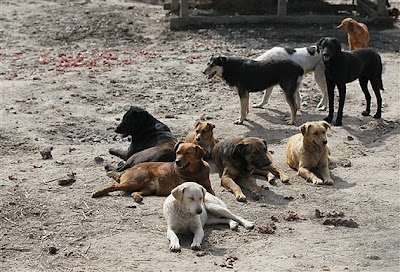
We Must Stop Killings Of Stray Dogs In India

For almost a year, rates of viral canine distemper among stray dogs in Navi Mumbai, India have been on the rise. This disease is highly-contagious and very often fatal due to it's incurable nature. Dogs with no homes, left to wander the streets of Navi Mumbai aren't vaccinated, and therefore much more susceptible to viral distemper. The dog pounds have filled up, so sterilization to prevent more puppies from being born into this situation is no longer an option. Cruel civilians have now taken it upon themselves to brutally kill these diseased dogs.

Many inhumane attacks have been reported, such as puppies being fastened to fireworks to die a painful, brutal death. Other civilians attempt to poison the stray animals, leaving them to suffer. The Navi Mumbai officials are not punishing those who kill these innocent dogs, leaving the offenders free to keep committing awful crimes against sick, stray dogs.


If the Navi Mumbai officials were to start enforcing laws against the torture of homeless animals, those brutally attacking these dogs would finally receive punishment for their actions. Giving severe consequences to the civilians killing stray dogs would surely steer others away from these cruel acts of violence.

Instead of allowing the citizens of Navi Mumbai to take matters into their own hands, city officials should be striving to look for more humane and ethical ways of solving the distemper outbreak issue. Sterilization, also known as spaying and neutering, is the smartest solution to ultimately decrease the future stray dog population. While there is no cure for the current outbreak of viral distemper in canine's, the dogs suffering should not have to be subjected to horrible deaths.

More awareness should be brought to this issue to show the need for free vaccination clinics, which would stop distemper in a dog before it could run its rampant course. Most importantly, Navi Mumbai officials must start taking action against inhumane stray dog killings. Sign this petition and demand that the Navi Mumbai Municipal Corporation start enacting laws against civilians torturing stray dogs and severely punish those who do not abide by these rules.

Friday, December 28, 2012

Care About The Stray Dogs In The Yucatan

"Dog!" I exclaimed to my husband, who was driving our small rental car along a toll-free road that meanders slowly through the towns of the Yucatan, slowly meandering much like the many stray dogs along these roads. Sometimes the dogs would sleepily walk into the road and stop, find a warm spot and lay down in the sun. These dogs don't know about time; their previous moments determine their next and that is all. I rescued one of my two dogs a year ago from a street in Laredo. He casually trotted in front of a car that screeched to a halt to avoid hitting him while I closed my eyes and hoped for the best. When I peeked out to see that he'd made it back onto the sidewalk, I got out of the car and beckoned him over. He didn't have tags, a chip, "wanted" signs or any ads online. And so I took him home with me and he's been a part of my family ever since.

The last thing I wanted to do during my recent trip to the Yucatan was hit a dog, so I watched the roads vigilantly as my husband drove. We didn't hit any dogs while we drove around the peninsula, but we came close. Since there are so many stray dogs in the Yucatan, they don't get spayed or neutered and the stray dog population keeps growing. There isn't any sort of government-operated SPCA or Humane Society in the Yucatan. Private organizations try to combat the situation and a Planned Pethood in the Yucatan aims to aggressively implement spay/neuter programs throughout the region, but the problem is still widely apparent. For anyone who has traveled to areas of the world wherein programs like these aren't financed fixtures, stray dogs are usually just an unfortunate truth of travel.


Winding our way through the small towns between Cancun and Merida, the dogs came in all sizes and colors. We occasionally passed an identifiable breed – a Doberman here, a litter of newborn Rottweilers there – but most of the dogs we saw on these roads were that recognizable mix of everything. Usually tan with a medium build, these dogs were wherever people were. Begging for food or attention, they weaved their way through pedestrians and cars in the towns we passed. Some of them looked surprisingly healthy with shiny coats and smiling faces. Others were mangy and diseased. Some were dead.

The reality of the stray dog problem in places like the Yucatan cannot be negotiated without concerted effort. These dogs are part of the culture and landscape of this peninsula, for better or worse, and for all intents and purposes, they always have been. Ancient Maya communities included domesticated dogs. The Maya used the dogs for hunting, companionship, food and sacrifice. They fed the dogs corn and some Yucatec Maya today continue this tradition and give dogs tortillas. Spanish explorers in the 16th century visited Merida and documented the breeding, feeding and sale of dogs in the city.


Maya literature incorporated dogs, too. The Popol Vuh is the K'iche' Maya creation story. According to it, the gods failed horribly at their second attempt to make humans. The legend says that these humans were made out of wood. These humans were emotionless and would not feed the dogs, so the dogs retaliated in anger and destroyed them. The lesson in this story resonated with the Maya and they placed strong emphasis on respecting and feeding dogs. Associated with human life, renewal and death, dogs were of incredible symbolic importance to the ancient Maya. They held the job of leading people into the Underworld and protecting the home. Dog remains have been found buried alongside humans in Maya graves and royal homes. Presumably, the dogs were buried with their owners in order to guide them into the afterlife.

I clenched my teeth each time we passed these dogs, dead or alive. Dogs have long been an important component of human life. A dog was found buried with a human in Palestine in a 12,000-year-old grave. A dog and human were found together in a 14,000-year-old burial site in Germany. In my experience, most people who grasp the unique relationship between dogs and humans have a difficult time witnessing the kind of abundance of stray dogs I saw while navigating those small-town roads in the Yucatan.

As I was getting ready to leave the market in Merida one afternoon, two little girls walked past me, both cradling tiny, dirty puppies in their hands. I asked the girls how old the dogs were and if I could pet them. I crouched down in the plaza and held one of the one-week-old puppies. I didn't know whether or not they belonged to the girls or the street and in that moment, it didn't matter. Just like every other puppy from every time period and every part of the world, the little dog eagerly welcomed my affection.