Friday, November 30, 2012

Rescuing A Stray Dog Is Quite Meaningful

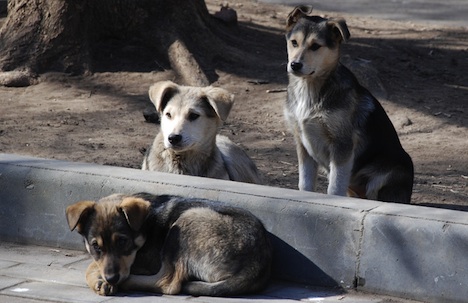
Adopting a stray dog may not be for all dog owners. When adopting a puppy or rescue dog you want to keep in mind that the temperament of the dog may be aggressive with other dogs and people. However, with the proper dog training you will be able to train your new rescue dog to adjust to it's new home.

Ever wondered what happens to a stray dog you once witnessed being run over by a car or chased by street hawkers? Before you start ponder for an answer, here's the upfront answer. Nothing! Throwing a piece of a waffle or a cookie is the closest thing to a considerate thing that happens to them.

It is a common misconception to believe that adoption is the first step towards helping a stray dog. The practical solution is slightly different and includes a few pre-requisites before you can contemplate on adopting a stray dog. Rescuing the dog becomes the first step. Even if the step isn't as gracious as adopting, it is equally rewarding. There are many rescue dog shelters in the USA provide dogs for a small fee to the right owners.


The next time you encounter a stray dog that has either shown up in your neighborhood or was found in tight spot on the streets, make an important note to remember the first step – Rescue. Ensure that the dog is not injured or bruised. A very obvious hint is the possibility of whining if the poor dog is injured. Please note that stray dogs do not trust so easily. Barking or threatening to bite is a clear good sign for you to call the animal shelter and let the experts do the job. If you are already experienced with snares and dogs, then do what you must to rescue. Getting a stray dog off the street is the first step to rescuing it because the dog is prone to succumb to despicable horrors like fast cars and brutal dogs. More than the aforementioned factors, starvation alone can kill a dog.

If the dog is injured, restraining it should not be a major challenge. However, calling the nearest animal shelter and letting them know of your coordinates is. One has to be clear while explaining the routes. At the same time, keeping a clear eye on the dog is important, lest it should run away. Getting too close to an injured stray dog is not a good idea as it may sense this as an act of aggression and try to defend itself. Most importantly, if the dog is stuck in the middle of the road, it becomes the spectator's duty to jump into action and divert traffic. Of course, all this will seem quite obvious but in time of dire need and worst case scenarios, one can often forget to do the obvious.

On all probabilities, it is a safe bet to be prepared. Having a kit in your vehicle doesn't hurt. The basic animal kit should contain leashes, snares, heavy blankets, water, dog food and more. Dog food is a clever method to lure a dog and earn its good trust. Do not forget to add first-aid equipment along with the kit. Sooner or later, you will be required to use one or more of these equipment from the kit.

Wednesday, November 21, 2012

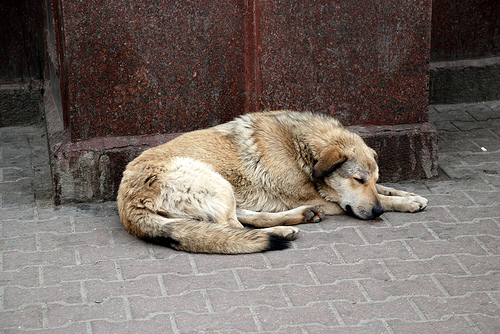
How To Take Good Care Of A Stray Dog

Have you adopted a stray dog that looked undernourished? Here's how to take the dog under your wing and nurse it back to health.


First, take the dog to a veterinarian. If the dog is reasonably healthy, have the veterinarian give him a Rabies vaccine. Never allow your veterinarian to give a vaccine to a sick animal or give several vaccines at the same time. Your veterinarian will examine the dog, check for parasites, and give medication if necessary. They will also check for infections, old injuries, and examine the condition of the dog's teeth. You will also find out if it is safe to handle the dog.

If the stray dog is very nervous or even slightly aggressive, get a closed-end muzzle for the dog. Then, brush or comb the dog to remove any parasites, preferably outdoors. If the veterinarian administers a spot-on treatment, don’t bathe the dog for at least 48 hours. To remove ticks, have the following ready: rubbing alcohol, tweezers, and paper towels. Settle the pup down and rub the alcohol on the ticks, then start plucking those nasty ticks off him. Be sure to dig the entire head of the tick out as well, because the tick may still survive. If the bites start to bleed, apply pressure on them with a paper towel. The bleeding will stop shortly. The dog may whine or wiggle if you hurt it, so soothe the animal by speaking softly and petting it.


A stray and neglected dog is almost always a hungry dog. When you take the animal to the vet, ask what kind of feeding schedule you should set up. Why? If the dog has a distended belly, and you over-feed it, you could twist its intestines and kill the poor animal. A hungry animal will devour a bucket full of food in a matter of minutes, so only set out small amounts every few hours. Be sure to provide the animal with clean, cold water as well.

After such a busy day–a change in environment, a trip to the vet, grooming, and a nice meal, allow the stray dog to catch up on some sleep. Humans need sleep to function properly and dogs are no different. Provide a soft blanket in a quiet corner and leave the animal alone to rest.

A stray dog has always been neglected; it searches for a loving and responsible pack. Make it feel loved and let it know that you will care for his future needs.
A stray dog loves it when you play with it. They also like it when you scratch them, it's like you're telling them, "you're safe with me", and so the dog will feel closer to you. You could also hug them and make them feel at home. But make sure the dog is clean and free from diseases because you might catch it yourself.

Always keep in mind that if you already have a dog, make sure your dog isn't in contact with the one you adopted until it has its set of vaccinations, and its behaviour is stable.

Wednesday, November 14, 2012

There Are Still Some Dangers Of Helping A Stray Dog

How many times have you seen a stray dog and wanted to take it home? How many times have you tried or succeeded in taking it home? We all feel bad for stray dogs, but there are some precautions that need to be taken before attempting to help one.

Just because a dog looks friendly, be cautious. Stray dogs can be very frightened of people. Some people are very cruel to stray dogs, and the dog may assume all people are that way. If the dog is in pain or is injured, he/she may bite out of fear, regardless how friendly he/she may be normally.

Dogs can't talk, right? Wrong! You just don't listen to us or rather, watch us. We communicate through body language. I'll translate for you. Panting, helicopter tail wagging, and ears up are usually signs of a dog that is happy to see you. A tight mouth, ears back, fur standing up, growling, and a stiff tail wag usually means "back off." This could mean the dog is scared or aggressive and could act on that.


Don't try to push the dog by putting your hands on him/her. Also, do not try to carry the dog unless it is very small and does not seem frightened or annoyed with you. A leash (or a make-shift leash) is your best option. If you put the dog in your car, you should use a crate.

Be aware of the fact that a stray dog has been outside without care for potentially a long time. He/she could be infested with fleas, worms, parasites, or any other illness, some of which are very contagious to other dogs. Do not put your own dogs in jeopardy.

If you want to keep the dog, take him/her directly to the vet and get an exam before going home. Regardless of what the vet says, clean your car, the crate, food/water dishes, blankets, or anything the dog touched before allowing your dog to use it. This also includes YOU! Your clothes, your shoes, your skin, anything the stray dog touched could be potentially harmful to your pup.

The dog may be a lost dog. Just because there is no collar does not mean he/she does not have a home. Collars and tags come off. Have the vet check for a microchip or a tattoo. Call local shelters, the police, or anyone that may be contacted when looking for a lost dog. You may also want to place an ad in the paper for a found dog.

Friday, October 19, 2012

What You Need To Know Before Adopting Stray Dogs

There are hundreds of stray dogs roaming in the streets. They either get run over by speeding cars or starve perpetually. Most of us feel bad about the sorry state of these animals but very few have the gumption to come forward and adopt stray dogs as their pets. There is no doubt about the nobility of your intentions but when your pet is a stray, you need to take some essential precautions.

Here are few things that you need to do if you are adopting a stray dog as your pet
Let Them In: Feeding a stray dog and allowing it to sleep on your doorstep is not technically 'adopting' him or her. It is like giving alms to a begging child and bringing him or her home as a domestic help. If you want to adopt the stray as your pet, you have to let him or her into your home. The stray dog should be treated as a part of your family as your other pets, if you have any.


Dog Vaccination: Being a stray dog, it is definite that your new pet probably has not received any vaccinations. It is crucial to have the stray dog vaccinated. In fact, you should do the immunization first and only then allow the dog to enter into your house.

Is The Dog Sane: Mad dogs or Rabies infected dogs can be very dangerous. It is essential that you put your stray dog through a full medical check-up at a good veterinary hospital. This will include both physical and mental tests. Tests like rabies are the most important, but other minor disorders like fleas or a fungal infection also need to be treated.

What Breed Is It: It might seem like a trivial question, but the reason to determine the breed of your stray pet is very relevant? Certain dog breeds have their own set of disorders and there are different methods to care for them. For example, a Saint Bernard is a cold weather dog that cannot adjust in warm climates. Most stray dogs in India are mongrel dogs.

Potty Training: Once you adopt the stray dog and bring it home, you will have to start training it. This is not going to be easy if the dog is an adult. It is always easier to train puppies. Having lived on the streets, the poor canine will have no toilet training. You have lots of hard work to do.

Be A Good Dog: Living on the streets instils a killer instinct in stray dogs. They are naturally aggressive and this can be a threat to your kids and neighbors. You need to have a strong method to curb aggressive behavior of your adopted pet.

Tuesday, October 16, 2012

Major Concerns With A Border Terrier Pet Dog

If you want to have a small but sturdy pet dog, then the Border terrier might be for you. This pet is no delicate lapdog. The Border terrier pet dog is full of fun for the whole family.
Before getting a Border terrier pet dog, however, you might want to consider some of the major concerns regarding the breed. This will help you weigh the pros against the cons and will let you reach a decision that would be best for you. Here are some concerns regarding Border terrier pet dogs:
1) Temperament - when people talk about terriers, they all comment on the same behavior using different words. Some people say that their dogs are feisty. Some say that their dogs are stubborn. Some people would prefer to use the word impulsive. The point is, they all describe the same behavior. A terrier is inherently dynamic in its behavior. It is part of what makes a terrier, a terrier.
The temperament of the Border terrier pet dog may be quite surprising, if not outright shocking for most people because of its size. For such a small dog, a Border terrier pet dog sure packs a lot of energy.
2) Aggression - Border terrier pet dogs are not really as aggressive as other breeds. However, its instincts as a terrier would still urge it to run after anything smaller than it. This means that if you own a cat or even a pet rabbit, you cannot have a Border terrier pet dog. This also means that you cannot trust a Border terrier pet dog out of its leash. If it even sees something running, it will take off, leaving you yelling uselessly. This, of course, can cause accidents to happen. In order to make sure that your Border terrier pet dog does not get hit by a car, you need to keep that pet on a leash outside.
3) Escape - it is recommended by many experts that Border terrier pet dogs should be kept in a fenced-in yard to let it have some roaming space while making sure that it is safe. However, you should know that Border terrier pet dogs are clever escape artists. Even if a Border terrier pet dog is within a closed in fence, you should try to keep an eye on it.
4) The noise - Border terrier pet dogs will bark at practically anything that catches their attention. Because of this, you need to properly train them to bark only when needed. You should also be quick to stop them if they are barking inappropriately.
For this reason, you should not really get a Border terrier pet dog if you live with very close neighbors and if you work during the day. An unsupervised Border terrier pet dog is sure to keep barking all day long. This, of course, may draw complaints from your neighbors.
5) Independent thinking - what people love about Border terrier pet dogs is the fact that they can learn very quickly. This is because of their inherent curiosity and toughness. However, the same qualities that make them prize-winners can also make them very stubborn when they want to. You have to be consistent with your commands and show the Border terrier pet dog that you mean what you say. In doing so, you will be training the Border terrier pet dog properly.