Thursday, December 13, 2012

Some Practical Steps To Help Stray Dogs Survive A Harsh Winter

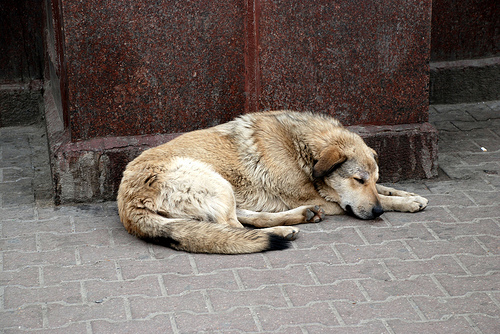
Making sure stray dogs are warm in the winter is a bit harder than doing the same for feral cats, but we should do whatever we can to help them. Remember that for the most part, stray dogs have a harder time adjusting to cold weather than stray cats, and their options for finding warmth are bit more limited. Here are some practical steps you can take to help stray dogs survive a harsh winter:


1) If you know of a specific area where stray dogs sleep, consider leaving some warm blankets, etc. there for them to sleep on. Blankets used by dogs can become icy and cold during the winter months, so make sure you minimize the risk of this happening by placing the blankets in a covered area such as under a bridge, overpass, etc. Remember to also place some kind of protective layer under the blanket, so that it won't get wet from the ground. Thin layers of styrofoam, which you can buy at most bigger hardware stores, will usually do the trick.

2) Building a winter shelter for stray dogs is a bit more challenging than building one for feral cats. You can follow the basic principles of building a cat shelter (as outlined in my previous post), but you would have to make both the entrance and the whole thing a lot bigger. The matter is somewhat complicated by the fact that stray dogs often move around a lot. Still, if you feel that this is an option and you know of a particular dog that will benefit, please do this. Some people recommend straw instead of blankets as bedding in dog houses, because, as we mentioned above, blankets used by dogs in the winter can sometimes get wet and icy.

3) Remember the importance of donating blankets, old sweaters, and any other such items to your local animal shelter. In many of these types of shelters around the world, dogs are kept outside in the winter, and need blankets, etc. to keep warm. This is a very simple, yet very effective way to help these animals.

Thursday, December 6, 2012

How Should We Treat A Stray Dog Correctly

For a stray dog. Nobody knows where he came from. Nobody knows what his breed is. Nobody knows whether he is sterilized or not. People in my street have given him an unusual name. But one thing that everybody knows is that he is a nuisance. He is a nuisance because he barks late at night and early in the morning. He is a nuisance because he sneaks inside the warm houses of people the moment he gets a chance. He is a nuisance because he steals food. He is a nuisance because he keeps strangers away from his street and snarls at new people. He is a nuisance because he wants to be loved.

This is not the story of just one dog. There are millions like this dog in every corner of our country. Our culture teaches us that every form of life is a part of God. Even animals are another form of God. But we forget this simple teaching when we beat these stray dogs black and blue and run them over by our cars. Sometimes we go to the extent of even poisoning them. We forget that they are also a form of life; they also need food and shelter to survive. They also need love.


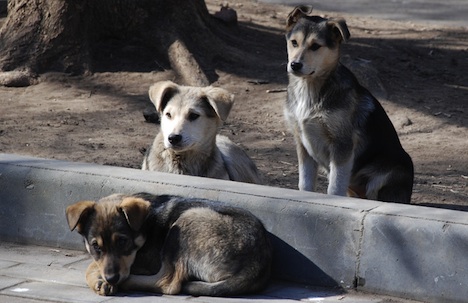
Being a city dog is not an easy task. It starts in their infancy when they have to fight with their siblings for their mother's milk. That mother who herself was a street dog and never got proper food her entire life. After this, these pups have to survive the streets where everyday either they are crushed under vehicles or are shooed away by humans. Those few who survive all this are not that lucky as this is when their lifelong battle with the streets and people begins.

During this battle, these dogs have to endure a lot. They are beaten up by people, treated extremely badly, run over by vehicles, have to live in filth and never get proper food. Some people go to the extent of poisoning these dogs to get rid of them. Those who care for these dogs are shunned by their neighbours for causing the so-called menace of stray dogs in the locality. What people fail to understand here is that why these dogs create such trouble. The simple answer lies in them not getting proper food and shelter. People who want to keep pets go for expensive purebred dogs and forget the fact that there is another homeless, equally loyal dog down the street that has to search for food every single day of its existence.


The menace of stray dogs is not limited to India; it is very much there in other countries like United States of America and United Kingdom. In 2010, there was a proposal in Bucharest to kill sick and aggressive dogs and those in shelters who are not adopted after seven days. These kinds of policies are not new and have been seen in a number of countries. There are countries which even follow these policies.

But killing these stray dogs is not an effective measure to tackle the problem, adopting them and treating them as a life form is. Instead of considering these dogs a nuisance we should consider them as friends and treat them properly. They crave for proper food, shelter and a bit of love. If we provide them that, then they can peacefully coexist along with us.

A more effective solution can be to capture these dogs, sterilize them and then restore them back to where they came from. This kind of a policy ensures that they are not ruthlessly killed. This also keeps a check on their growing population. This measure has been undertaken in a number of countries and even in India. Also, proper NGO's can be set up to pick up these unwanted dogs and make them available for adoption. People should be encouraged to adopt these street dogs instead of buying expensive dogs.

Friday, November 30, 2012

Rescuing A Stray Dog Is Quite Meaningful

Adopting a stray dog may not be for all dog owners. When adopting a puppy or rescue dog you want to keep in mind that the temperament of the dog may be aggressive with other dogs and people. However, with the proper dog training you will be able to train your new rescue dog to adjust to it's new home.

Ever wondered what happens to a stray dog you once witnessed being run over by a car or chased by street hawkers? Before you start ponder for an answer, here's the upfront answer. Nothing! Throwing a piece of a waffle or a cookie is the closest thing to a considerate thing that happens to them.

It is a common misconception to believe that adoption is the first step towards helping a stray dog. The practical solution is slightly different and includes a few pre-requisites before you can contemplate on adopting a stray dog. Rescuing the dog becomes the first step. Even if the step isn't as gracious as adopting, it is equally rewarding. There are many rescue dog shelters in the USA provide dogs for a small fee to the right owners.


The next time you encounter a stray dog that has either shown up in your neighborhood or was found in tight spot on the streets, make an important note to remember the first step – Rescue. Ensure that the dog is not injured or bruised. A very obvious hint is the possibility of whining if the poor dog is injured. Please note that stray dogs do not trust so easily. Barking or threatening to bite is a clear good sign for you to call the animal shelter and let the experts do the job. If you are already experienced with snares and dogs, then do what you must to rescue. Getting a stray dog off the street is the first step to rescuing it because the dog is prone to succumb to despicable horrors like fast cars and brutal dogs. More than the aforementioned factors, starvation alone can kill a dog.

If the dog is injured, restraining it should not be a major challenge. However, calling the nearest animal shelter and letting them know of your coordinates is. One has to be clear while explaining the routes. At the same time, keeping a clear eye on the dog is important, lest it should run away. Getting too close to an injured stray dog is not a good idea as it may sense this as an act of aggression and try to defend itself. Most importantly, if the dog is stuck in the middle of the road, it becomes the spectator's duty to jump into action and divert traffic. Of course, all this will seem quite obvious but in time of dire need and worst case scenarios, one can often forget to do the obvious.

On all probabilities, it is a safe bet to be prepared. Having a kit in your vehicle doesn't hurt. The basic animal kit should contain leashes, snares, heavy blankets, water, dog food and more. Dog food is a clever method to lure a dog and earn its good trust. Do not forget to add first-aid equipment along with the kit. Sooner or later, you will be required to use one or more of these equipment from the kit.

Wednesday, November 21, 2012

How To Take Good Care Of A Stray Dog

Have you adopted a stray dog that looked undernourished? Here's how to take the dog under your wing and nurse it back to health.


First, take the dog to a veterinarian. If the dog is reasonably healthy, have the veterinarian give him a Rabies vaccine. Never allow your veterinarian to give a vaccine to a sick animal or give several vaccines at the same time. Your veterinarian will examine the dog, check for parasites, and give medication if necessary. They will also check for infections, old injuries, and examine the condition of the dog's teeth. You will also find out if it is safe to handle the dog.

If the stray dog is very nervous or even slightly aggressive, get a closed-end muzzle for the dog. Then, brush or comb the dog to remove any parasites, preferably outdoors. If the veterinarian administers a spot-on treatment, don’t bathe the dog for at least 48 hours. To remove ticks, have the following ready: rubbing alcohol, tweezers, and paper towels. Settle the pup down and rub the alcohol on the ticks, then start plucking those nasty ticks off him. Be sure to dig the entire head of the tick out as well, because the tick may still survive. If the bites start to bleed, apply pressure on them with a paper towel. The bleeding will stop shortly. The dog may whine or wiggle if you hurt it, so soothe the animal by speaking softly and petting it.


A stray and neglected dog is almost always a hungry dog. When you take the animal to the vet, ask what kind of feeding schedule you should set up. Why? If the dog has a distended belly, and you over-feed it, you could twist its intestines and kill the poor animal. A hungry animal will devour a bucket full of food in a matter of minutes, so only set out small amounts every few hours. Be sure to provide the animal with clean, cold water as well.

After such a busy day–a change in environment, a trip to the vet, grooming, and a nice meal, allow the stray dog to catch up on some sleep. Humans need sleep to function properly and dogs are no different. Provide a soft blanket in a quiet corner and leave the animal alone to rest.

A stray dog has always been neglected; it searches for a loving and responsible pack. Make it feel loved and let it know that you will care for his future needs.
A stray dog loves it when you play with it. They also like it when you scratch them, it's like you're telling them, "you're safe with me", and so the dog will feel closer to you. You could also hug them and make them feel at home. But make sure the dog is clean and free from diseases because you might catch it yourself.

Always keep in mind that if you already have a dog, make sure your dog isn't in contact with the one you adopted until it has its set of vaccinations, and its behaviour is stable.

Wednesday, November 14, 2012

There Are Still Some Dangers Of Helping A Stray Dog

How many times have you seen a stray dog and wanted to take it home? How many times have you tried or succeeded in taking it home? We all feel bad for stray dogs, but there are some precautions that need to be taken before attempting to help one.

Just because a dog looks friendly, be cautious. Stray dogs can be very frightened of people. Some people are very cruel to stray dogs, and the dog may assume all people are that way. If the dog is in pain or is injured, he/she may bite out of fear, regardless how friendly he/she may be normally.

Dogs can't talk, right? Wrong! You just don't listen to us or rather, watch us. We communicate through body language. I'll translate for you. Panting, helicopter tail wagging, and ears up are usually signs of a dog that is happy to see you. A tight mouth, ears back, fur standing up, growling, and a stiff tail wag usually means "back off." This could mean the dog is scared or aggressive and could act on that.


Don't try to push the dog by putting your hands on him/her. Also, do not try to carry the dog unless it is very small and does not seem frightened or annoyed with you. A leash (or a make-shift leash) is your best option. If you put the dog in your car, you should use a crate.

Be aware of the fact that a stray dog has been outside without care for potentially a long time. He/she could be infested with fleas, worms, parasites, or any other illness, some of which are very contagious to other dogs. Do not put your own dogs in jeopardy.

If you want to keep the dog, take him/her directly to the vet and get an exam before going home. Regardless of what the vet says, clean your car, the crate, food/water dishes, blankets, or anything the dog touched before allowing your dog to use it. This also includes YOU! Your clothes, your shoes, your skin, anything the stray dog touched could be potentially harmful to your pup.

The dog may be a lost dog. Just because there is no collar does not mean he/she does not have a home. Collars and tags come off. Have the vet check for a microchip or a tattoo. Call local shelters, the police, or anyone that may be contacted when looking for a lost dog. You may also want to place an ad in the paper for a found dog.